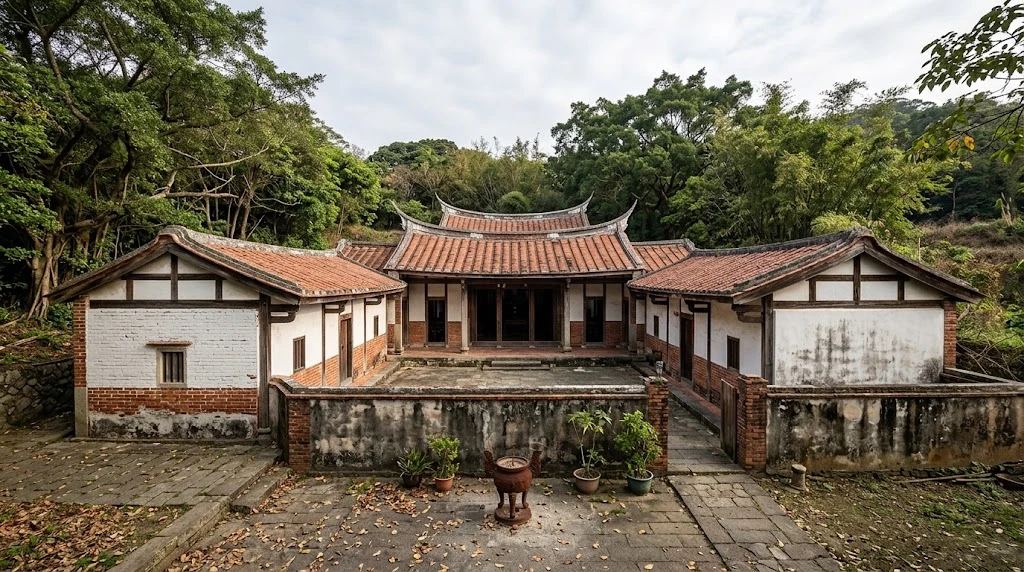
Tamsui Yinshan Temple
Main Deities
About
Yinshan Temple will make you rethink what a temple is: its two side wings were not built for a deity but for people to sleep in. Founded in 1822, the 2nd year of the Daoguang reign, by Hakka migrants from Tingzhou in western Fujian, it enshrines their guardian, Dingguang Gufo (the Dingguang Buddha), and its two wings were set up as the Tingzhou Guild Hall so that fellow countrymen arriving later had a place to stay as soon as they stepped off the boat. Like the Dingguang Buddha temple in Changhua, it is a Qing-era Dingguang Buddha temple that doubled as a Tingzhou guild hall. Its layout is two halls, two corridors, and two side wings, and it is now a national historic site. For those Hakka migrants, this temple was both the deity's home and their own: first they settled their faith, then they settled themselves.
History
In 1822, the 2nd year of the Daoguang reign, Hakka migrants from Tingzhou in western Fujian built Yinshan Temple in Tamsui. The brothers Luo Kebin and Luo Kerong of Yongding County donated the land, and Zhang Minggang raised the funds. These migrants were a relatively small group among Taiwan's settlers, different in language, homeland, and customs from the Quanzhou and Zhangzhou settlers around them, so from the very start the temple was more than a place of worship. Its two side wings served as the Tingzhou Guild Hall, a place for countrymen who had just crossed the strait and had nowhere yet to stay. The deity in the main hall, the newcomers in the wings: one building that made "protection" mean exactly what it says. In two hundred years its layout has barely changed, which is why it is a national historic site today.
IllustrationTamsui Yinshan Temple
Tamsui District, New Taipei City
Visitor Info
Address
No. 15, Denggong Rd, Tamsui District, New Taipei City
Region
Tamsui District, New Taipei City
Plan Your Visit
- Hours
- Daily 7:00 AM – 5:30 PM
- When to Go
- Dingguang Gufo's birthday on lunar 1/6 is the most important celebration of the year.
Checked on 2026-10-13 · Sources: Google Maps