Linkou Zhulinshan Guanyin Temple
Main Deities
About
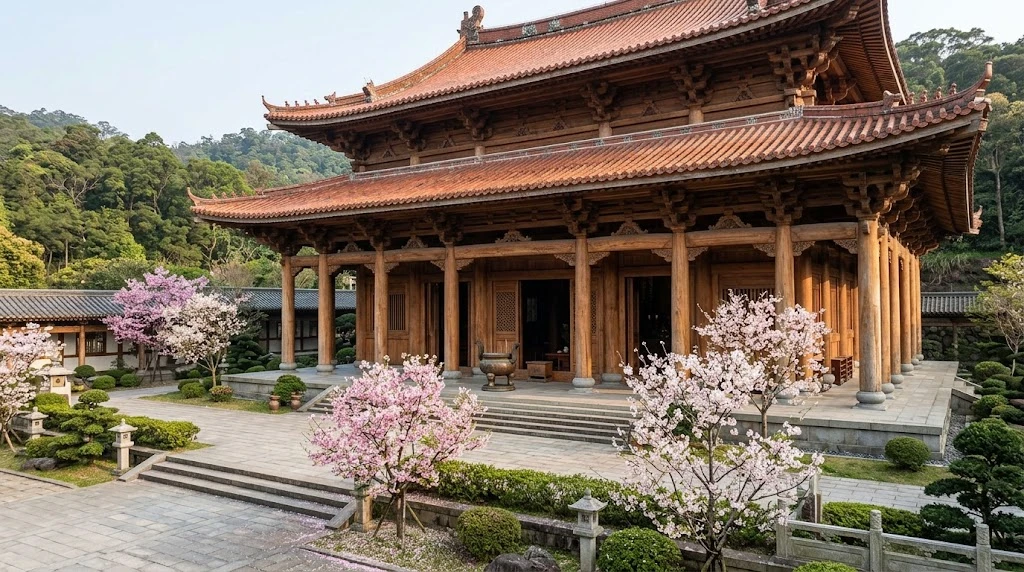
Zhulinshan Guanyin Temple's name is pieced together from three place names, Luzhu, Linkou, and Guishan, one character from each. The name says plainly what the temple is: not one village's shrine, but a center of faith that three communities raised together. It enshrines the Eighteen-Armed Guanyin, and its halls were rebuilt and completed in 2012. In front of the temple lies a garden of about 20,000 ping, with cherry blossoms in spring; on a weekday morning there is little to hear but someone sweeping. It is one of the few places on the edge of greater Taipei that manages to be both big and quiet.
History
In 1801, the 6th year of the Jiaqing reign, Sanyi migrants in the Linkou area formed the Longshan Temple Patrons' Association. In 1853, the 3rd year of the Xianfeng reign, Manka Longshan Temple gave the Linkou faithful one of the three Guanyin statues it had brought from Longshan Temple in Anhai, Quanzhou, during the Qianlong era. The real test came late in the Japanese colonial period with the Kominka assimilation campaign: the authorities banned Taiwanese folk religion and tried to burn its statues, and believers had no choice but to hide the Guanyin and worship in secret. Later, the Japanese government allowed a temple in Japanese style to be built, and it was completed at the present site in 1939 under the name Linkou Longshan Temple. Only in 1949 was it renamed Zhulinshan Guanyin Temple, taking one character each from Luzhu, Linkou, and Guishan. In 2012, after study trips to temples in many places, the rebuilding was completed, giving the temple the look you see today.
IllustrationLinkou Zhulinshan Guanyin Temple
Linkou District, New Taipei City
Visitor Info
Address
No. 325, Zhulin Rd, Linkou District, New Taipei City
Region
Linkou District, New Taipei City
Plan Your Visit
- Hours
- Daily 6:00 AM – 10:00 PM
- When to Go
- Sutra-chanting and blessing ceremonies are held on Guanyin's three feast days (lunar 2/19, 6/19, and 9/19). Cherry blossoms bloom in the garden in spring, and weekday mornings are the quietest.
Checked on 2026-10-13 · Sources: Google Maps